Traditional Food of the Kikuyu People of Kenya
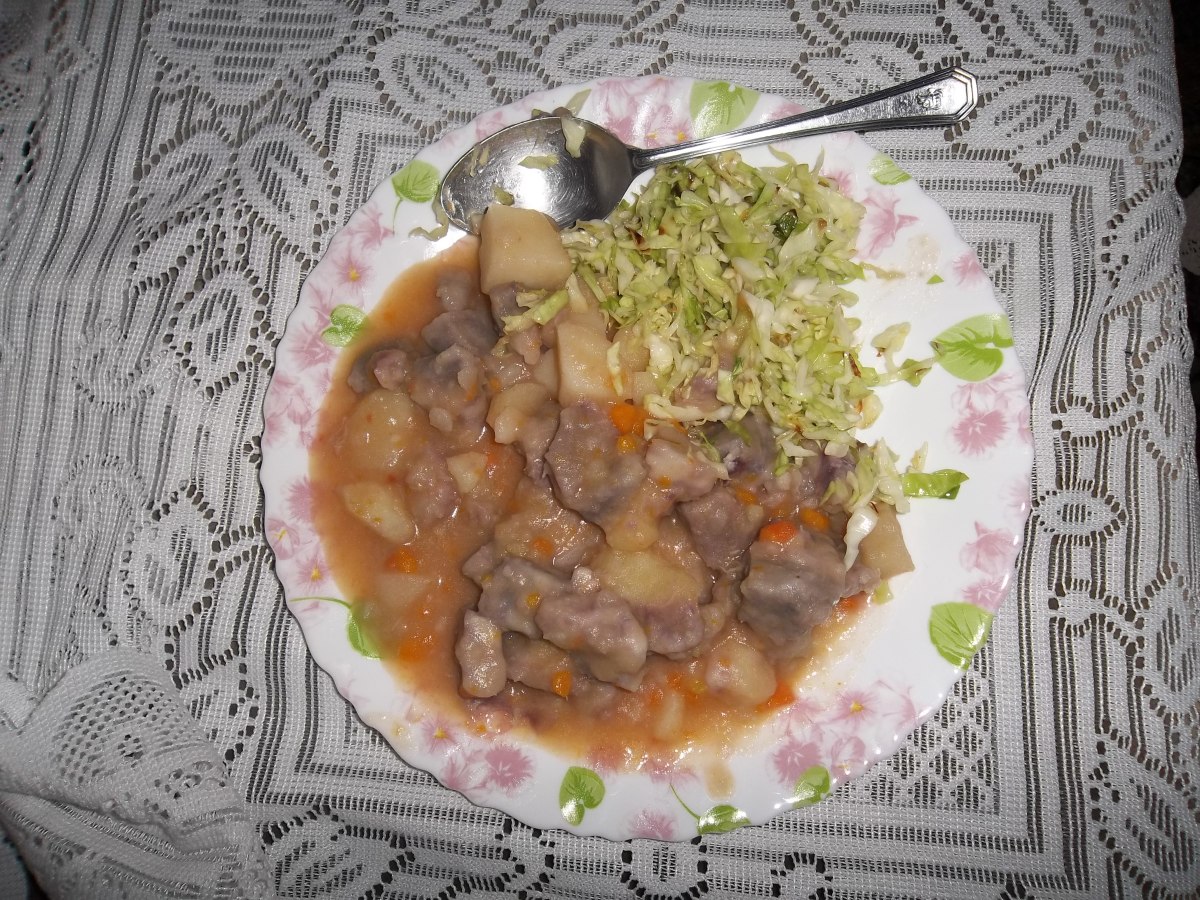
The Kikuyu of Kenya and what they Ate
The Kikuyu were a mixed farming community. Their diet was mainly from agricultural produce. They kept cattle and goats, but mainly for ritual purposes and as a currency for the purchase of goods and the payment of dowry. They therefore ate meat during ceremonies that required the slaughter of a goat or cow, and not just because someone had not eaten meat for a long time. Like in the Maasai community, the Kikuyu were forbidden from eating wild animals. It was also taboo to eat birds like chickens and ducks. However, these taboos did not apply to uncircumcised boys, and families adopted from communities that had no qualms about eating the forbidden animals. For example, Ndorobo Kikuyus were known as 'Athi,' a term that translates as 'hunters,' among other meanings. They, therefore, were free to eat the produce of their labour, but no self-respecting Kikuyu would have eaten an antelope, a hare, fish, or even a chicken. Meat was therefore rare in the Kikuyu diet in early times. I have heard the elderly say that when a family ate meat, they used the animal's fat to smear their legs so everybody who saw the shiny legs would know.
Things are very different today. The Kikuyu eat all kinds of meat, including the previously despised fish and pork. Their mixed farming now includes poultry, rabbits, and even fish farming. The only animal that is yet to be domesticated by a Kikuyu is the camel.
Below is a description of Kikuyu traditional foods.

Cereals used by the Kikuyu
- maize (Zea mays) mbembe
- maize flour (Zea mays) Mũtu wa mbembe
LSB Leakey, in his book on the Southern Kikuyu, states that an old man told him his father would not eat maize because it was not a Kikuyu food. Maize was introduced to Africa by the Portuguese at the coast.
- bullrush millet flour (Pennisetum americanum) Mũtu wa mwere
- finger millet flour (Eleusine coracane) Mũtu wa ũgimbi
- sorghum flour (Sorghum bicolor) Mũtu wa mũhĩa
Apart from the maize that was boiled, roasted, or served in a mixture with beans (githeri) as a meal, the rest were used as flours for porridge. It is believed that a porridge is more nutritious when it is a mixture of as many cereals as possible, including a bit of maize flour. Flour mixed with water is allowed to sit for several days to ferment. It is believed that adding maize flour hastens the fermentation process. The product of this process is very tasty. When not fermented, lemons are added to give an alternative flavour. In the old days, sugar was not used in porridge. People had a choice between bicarbonate of soda, salt, or nothing. Interestingly, this soda was added to practically every boiling dish, apparently to hasten the cooking process.
Soda ash is the chemical sodium carbonate. It is an antacid that neutralises stomach acids. Sodium is essential for good health. It helps to maintain electrolytes in the body, helps nerve tissue to transmit impulses and helps muscles to expand and contract normally.
It should be noted that sodium, which is the main compound in common salt, has health disadvantages when taken in large amounts.
Legumes Used by the Kikuyu
- cowpea, (Vigna spp.) thoroko
- green mung bean, (Phaseolus aureus) ndengũ; thuu
- kidney bean, (Phaseolus vulgaris) mboco
- lima bean, (Phaseolus lunatus) noe
- pigeon pea, (Cajanus cajan) njũgũ
- bonavist bean (Lablab niger) njahĩ
Njahi are prized as a nutritious food for nursing mothers. People tell a nursing mother that ‘ninguka kuria njahi’ – I will come to eat Njahi, the real meaning being that I will soon come to see the new baby.
Archaeological evidence shows that about 3500 years ago it was under cultivation in parts of India, from where it found its way into Africa. It was taken from the Congo to the Caribbean by the colonialists and is known as the ‘congo bean’ or ‘ungo bean’ over there.
The Kikuyu use all the above legumes either;
1. in a mashed up of bananas, maize, and sometimes a green vegetable and served with a stew. Irish potatoes often replace the bananas.
2. Mixed with maize as an alternative to ‘Maize and beans’—githeri
Flavors of Africa by Evi Aki brings together culinary heritage from across the continent—making it a thoughtful companion to any discussion on Kikuyu foodways. While our fermented ucuru and roasted maize may not all appear within its pages, this book offers a Pan-African context that honours shared techniques, communal cooking, and storytelling through meals.
- Generational classics: From Nigerian Jollof Rice to Eritrean lentils with berbere spice
- Modern twists: Inspired recreations of street foods like Zanzibar Pizza
- Stories behind the meals: Family-rooted, memory-rich narratives that stir more than appetites

🍲 EXPLORE THE BOOK ON AMAZON →
*Disclosure: As an Amazon Associate, I earn from qualifying purchases. This supports my work in preserving and sharing African foodways and memory—one plate at a time.*
Tubers Used by the Kikuyu
- cassava (Manihot esculenta) mwanga(singular); mĩanga (plural)
- green banana (Musa paradisiacal) irigũ(s); marigũ(p)
- potato, sweet (Ipomoea batatas) ngwacĩ
- yam (Dioscorea spp.) gĩkwa(s); ikwa(p)
Taro (Colocasia esculenta) Ndũma
The Ndũma tuber was a delicacy among the Kikuyu.
This plant belongs to the Araceae (Arum) family. In west Africa it is called cocoyam, though it is not a yam. Yams are vines, while Ndũma is a lily. It is also called kolocasi, ocumo, arum lily, and dasheen in the Caribbean region. This plant is known as Ndũma among many of Kenya’s Bantu speakers.
Every Kikuyu family had a Kianda – a flooded patch in a valley where Ndũma were grown. The water would be supplied by a slow-moving stream. Sometimes a family walked for three hours or more to their kianda at a patch allocated to them by relatives. To harvest the tuber, the soil around the base is loosened and the entire plant is pulled out. The corm is cut off with a knife, leaving a small portion to hold the leaves together. This small leftover corm is returned to the soil and a fresh corm develops from it. Virgin corms are sharp pointed but secondary corms are flat at the bottom, giving the impression of a drum. Ndũma tubers are rich in amylase, a soluble starch, potassium, and carotene.
This is just a glimpse into the full story. To read the complete article and explore all 10 curated pieces, hit this buttone:

Preserving Kikuyu memory takes time, care, and community support.
If this post added to your understanding, Buy Me a Coffee and help keep these stories alive.


Comments
Post a Comment
Your comments are very important to this blog. Feel very free to make your opinion known. We will respect it.