Traditional Religion of the Kikuyu People of Kenya
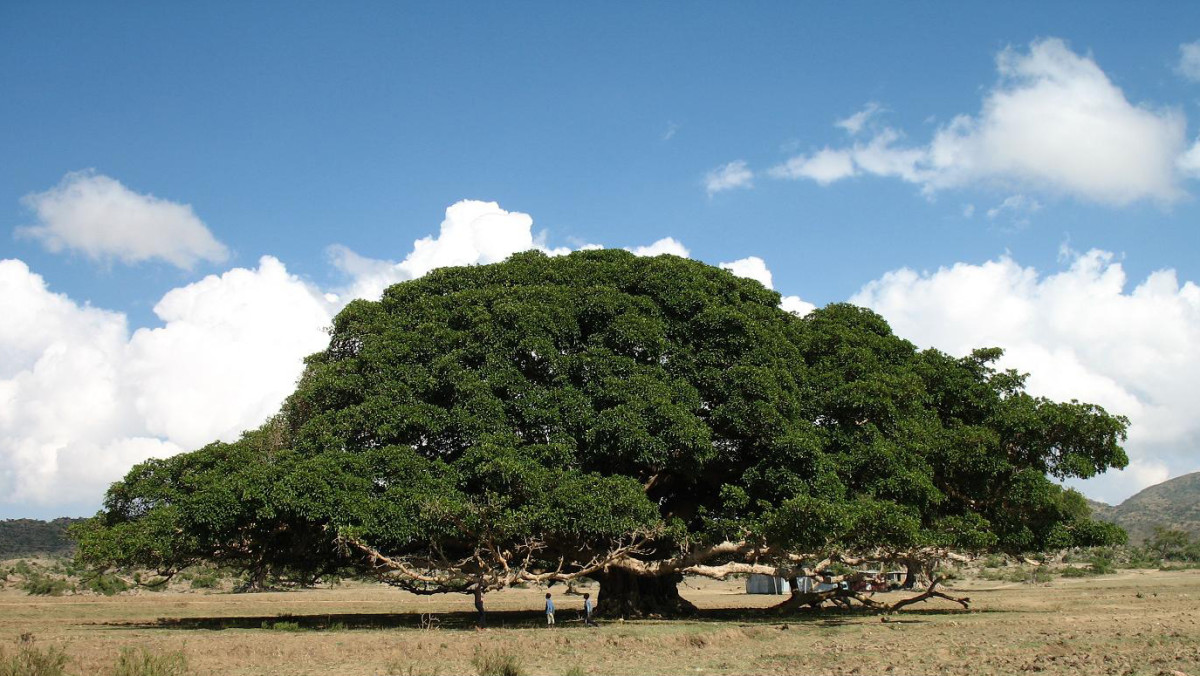 The Mũkũyũ (Ficus sycomorus) was the sacred tree of Kikuyu. in its absence, the Mugumo (Ficus natalensis/thoningii)
 The Kikuyu People of Kenya
The Kikuyu people of Central Kenya believed in one God. They also had a concept of ‘being born again,’ and every child had to undergo a ritual of being born again to be a complete member of the community.
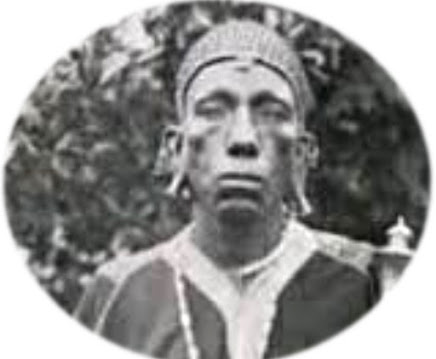
When the firstborn child was ready for religious instructions, the child’s uncle from the mother’s side, known as Nyarũme, charged a fee in goats to pierce three holes in the upper earlobe of the child. Three sticks, known as ndũgĩra, were inserted in those holes like aerials that directed the new information into the ear for memorisation.
In Kikuyu, God is called Ngai or Mwenenyaga
The Kikuyu religion was not separate from the ordinary lives of the people. One did not have the choice to either believe or not believe. There were no atheists. Everything a Kikuyu did or did not do impacted their relations with other community members, God, spirits and ancestors. Ngai is the word for God, including an archaic word—Mũrungu. Mũrungu is a compound word combining Mũ and Rungu. Mũ is a prefix for the class one nouns that denote objects with a spirit. Rungu means "under." This word has the same etymology as the Swahili word Mungu, meaning "God."
God was also called Mwene hinya ("owner of power"). Mwathani ("the ruler"), and Mwene nyaga ("owner of brightness"). Since Nyaga also means "ostrich." some people have gone for the simplistic interpretation of "owner of ostriches." Nyaga also means "brightness," however, and manyaganyaga means "glitter," presumably what you see when you look at the snow-capped Mt. Kenya.
According to Stanley Gathigira, Mwenenyaga was good deity of the Kikuyu and had an evil counterpart who was the deity of the Maasai, the perennial enemies of the Kikuyu. It seems the Kikuyu did not countenance their God to be a God for all human beings. Nevertheless, God had a duality: Mwerũ ("bright," "light," "white") and Mũirũ ("dark," "black"). L.S.B. Leakey attributes this duality to the sun and moon, but no one else has confirmed this interpretation.
When women prayed, they said, Ngai! Ngai Mwerũ na Ngai Mũirũ, njiguĩra tha—"God! white God and black God, have mercy on me." Since colours had symbolic meanings, the interpretation of black and white may not be accurate. The Meru people, who are linguistically and culturally close to the Kikuyu, have white, black and red clans that have nothing to do with real color pigments.

Mt. Kenya and Other Sacred Mountains of the Kikuyu
Mt. Kenya was not the only sacred Mountain. When a Man In the Kabete area slaughtered a goat for any reason, he spilled the first gush of blood to the ground for arĩa methĩ, those underground, ancestral spirits. He then held some blood in a calabash, faced Mt. Kenya and said a prayer, then faced Kinangop in the Aberdares ranges, followed by Donyo Sabuk and Ngong. There may have been other sacred mountains besides Mt. Kenya, depending on where a community lived. The Longonot crater, an extinct volcano in the Rift Valley, is also mentioned as sacred to the Kikuyu.
This is just a glimpse into the full story. To read the complete article and explore all 10 curated pieces, grab the full PDF here
Preserving Kikuyu memory takes time, care, and community support. If this post added to your understanding, Buy Me a Coffee and help keep these stories alive.
References
- Ellison T. R. (2006). "Tree Goddesses of Ancient Egypt." Tour Egypt, http://www.touregypt.net/featurestories/treegoddess.htm.
- Gathigira, S. (1986). Mīikarīre ya Agīkũyũ. Scholars Press.
- Leakey, L.S.B.(1977). The Southern Kikuyu Before 1903. Academic Press, London.
- Middleton J., & Kershaw G. (1965). The Central Tribes of the Northeastern Bantus. International African Institute, London.
- Routledge, K. (1910). Life With a Prehistoric People.


Comments
Post a Comment
Your comments are very important to this blog. Feel very free to make your opinion known. We will respect it.